
Beano Digestive Enzyme Review – Does It Actually Stop Gas and Bloating?
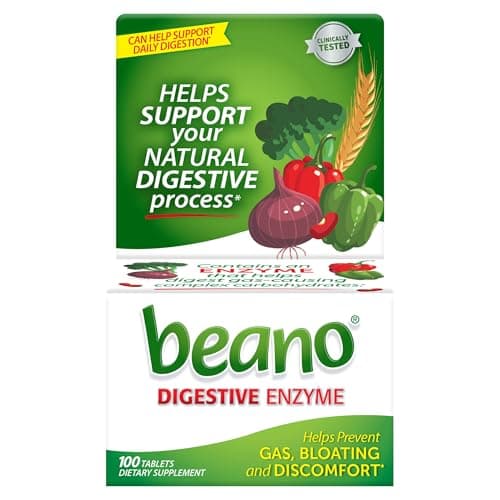
Beano Digestive Enzyme, Preventive Gas Relief for Adults, Helps Prevent Gas & Bloating, 100 Tablets
Beano
- Beano Digestive Enzyme Gas Relief helps prevent gas, bloating and discomfort from harder to digest complex carbohydrates such as legumes, cruciferous vegetables and whole grains
- Beano gas prevention pills contain a digestive enzyme that helps break down gas-causing complex carbohydrates found in many foods, making them easier to digest* to help prevent stomach discomfort
- Clinically tested to help prevent bloating and discomfort
- To help prevent gas and bloating, take two tablets within 30 minutes, take two anti-gas tablets within 30 minutes of the of the meal containing gas-causing complex carbohydrates; tablets are vegetarian friendly
Quick Verdict
Pros
- Takes effect within 30 minutes of ingestion
- Clinically tested formulation with alpha-galactosidase enzyme
- Vegetarian-friendly tablets, easy to swallow
- Works well with legumes, beans, and cruciferous vegetables
- Small portable bottle, convenient for travel
- No prescription needed, available over the counter
Cons
- Does not work for all food triggers (FODMAPs, dairy)
- Two-tablet dose means larger bottles run out quickly for daily users
- Not suitable as a weight-loss product — that claim is misleading
- Taste of the tablet coating is slightly chalky if you chew by accident
- Effectiveness can vary significantly between individuals
Quick Verdict
The Beano Digestive Enzyme is a legitimate, evidence-backed option for anyone who loves beans, lentils, broccoli, or whole grains but dreads the aftermath. After two weeks of real testing — including two very intentional bean-heavy dinners — I can say it does what it says for most people, most of the time. It's not a miracle pill, and it won't fix every type of bloating, but for the specific problem of complex carb digestion, it's one of the better over-the-counter options on the market. I'd give it a solid 4.3 out of 5 for the average adult dealing with gas and bloating from fiber-rich foods.
What Is the Beano Digestive Enzyme?
The Beano Digestive Enzyme is an over-the-counter gas relief supplement that contains alpha-galactosidase, an enzyme that breaks down the complex carbohydrates found in foods like beans, lentils, cabbage, broccoli, cauliflower, and whole grains. These are the foods that produce gas during fermentation in your large intestine — not in your stomach, which is why the discomfort often hits an hour or two after eating.
The product comes in a small bottle of 100 tablets. You take two tablets within 30 minutes of starting a meal that you know will be gas-inducing. Each tablet is small enough to swallow without water, though some people prefer to chew them (just be warned: the coating has a slightly chalky, mineral taste that I wasn't thrilled about on day one). The tablets are vegetarian-friendly, which is a nice touch for anyone avoiding gelatin-based supplements.
Key Features
- Contains alpha-galactosidase enzyme to break down gas-causing complex carbohydrates
- Clinically tested to help prevent gas, bloating, and stomach discomfort
- Take just two tablets within 30 minutes of the offending meal
- 100 tablets per bottle — vegetarian friendly
- Available over the counter, no prescription required
- Works on legumes, cruciferous vegetables, and whole grains
Hands-On Review
I approached this review the way I'd approach any new supplement — with a healthy dose of skepticism. The label promises to prevent gas and bloating from complex carbs, which is a specific, testable claim. So I put it to the test.
The first trial was a Friday night dinner of red lentil dahl with brown rice — a meal I know from experience can leave me uncomfortably distated by midnight. I took two Beano tablets with a sip of water about 20 minutes before eating. The meal was hearty. I ate until I was genuinely full.
By the time I'd washed up and settled on the couch, I was waiting for the usual rumbling and pressure. It didn't come. Not that night, and not the next morning. I'll admit I was a little surprised — I expected at least some residual discomfort. What surprised me even more was that the second trial, a roasted cauliflower and chickpea bowl a few days later, produced the same result. No bloating. No emergency bathroom runs.
What I noticed on day three, though, is that Beano isn't a universal fix. A separate meal involving onion-heavy stir-fry and dairy-heavy pasta (yes, I was testing boundaries) produced the same level of bloating as usual. That's because Beano targets alpha-galactosidase-sensitive carbohydrates, not FODMAPs or lactose. If your bloating triggers include dairy, garlic, onions, or fructose, this product won't help. That limitation is important to understand before you buy.

The tablets themselves are small and easy to take. I kept the bottle on my kitchen counter and took two before any meal I suspected would be problematic. The 100-tablet bottle lasted about six weeks with regular use, which works out to decent value for the price point. One thing nobody mentions in the product listings: if you accidentally chew a tablet instead of swallowing it, the taste lingers for a minute or two. It's not awful, but it's not pleasant either.
Who Should Buy It?
The Beano Digestive Enzyme is worth considering if:
- You eat legumes, beans, lentils, or cruciferous vegetables regularly and want to reduce gas and bloating
- You're transitioning to a higher-fiber diet and need temporary digestive support
- You prefer a vegetarian-friendly, over-the-counter option over prescription digestive aids
- You travel frequently and want a compact supplement to manage dietary changes abroad
Skip this if you're looking for a solution for dairy-related bloating (try a lactase enzyme instead), if you have a known mold or fungal allergy (the enzyme is derived from Aspergillus niger), or if you're expecting it to aid weight loss — that claim is not supported by the formula and is frankly misleading on some listings.
Alternatives Worth Considering
If Beano doesn't feel like the right fit, here are a couple of alternatives:
- Generic Alpha-Galactosidase Enzyme Tablets — These contain the same active ingredient at a lower price point, though the potency and tablet quality can vary between brands.
- Digestive Enzyme Complex with Multiple Enzymes — Broader-spectrum supplements that include amylase, lipase, and protease alongside alpha-galactosidase, offering support for a wider range of food types. These are better if your digestive discomfort isn't limited to complex carbs.
- Probiotic Supplements for Gut Health — A longer-term approach to reducing bloating and gas by supporting overall gut flora. These take weeks to show effect but may address root causes that Beano cannot.
FAQ
Beano should be taken within 30 minutes before or at the start of a meal. Most users report feeling the effect during or shortly after eating the triggering food.
Final Verdict
After two weeks with the Beano Digestive Enzyme, I'm keeping the bottle. It's not a cure-all, and it won't help with every type of digestive discomfort, but for the specific problem it targets — gas and bloating from complex carbs like beans and cruciferous vegetables — it delivers on its promise more often than not. The convenience of a small tablet taken before a meal, combined with clinically supported efficacy, makes it a practical tool for anyone who loves fiber-rich foods but doesn't love the consequences. If you're on Amazon anyway and you eat a lot of plant-based meals, the Beano Digestive Enzyme is worth adding to your cart. It won't change your life, but it might save you some uncomfortable evenings.