
Garmin Forerunner 245 Music Review: The GPS Watch Serious Runners Actually Need
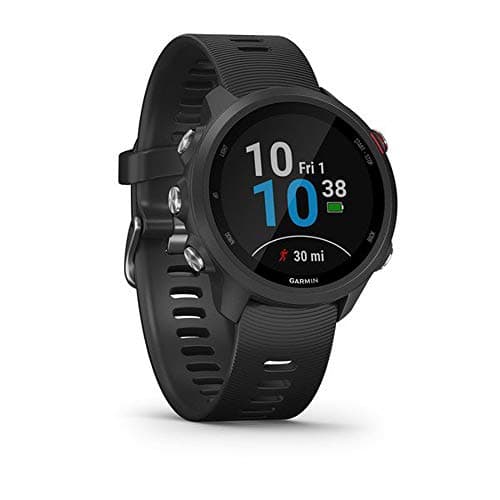
Garmin 010-02120-20 Forerunner 245 Music, GPS Running Smartwatch with Music and Advanced Dynamics, Black
Garmin
- GPS running smartwatch with music advanced training features, Lens Material:Corning Gorilla Glass 3, Bezel Material: fiber-reinforced polymer, Strap material:silicone
- Battery life: up to 7 days in smartwatch mode and 6 hours in GPS mode with music
- Evaluates your current training status to indicate if you’re undertraining or overdoing it; Offers additional performance monitoring features
- Get free adaptive training plans from Garmin coach, or create your own custom workouts on our Garmin connect online fitness community
Quick Verdict
Pros
- Advanced running dynamics including cadence, stride length, and ground contact time
- Built-in music storage with Spotify integration — run phone-free with your playlists
- Training status feature genuinely helps prevent overtraining and undertraining
- Reliable GPS accuracy across different environments and terrain types
- Garmin Coach provides free adaptive training plans for 5K, 10K, and half-marathon distances
- Lightweight design at 38.5g stays comfortable during long runs
- Incident detection adds a layer of safety for solo runners
Cons
- Running dynamics metrics require a separate Running Dynamics Pod or HRM chest strap (additional $40–$90)
- Screen brightness struggles in direct sunlight compared to newer models
- Limited smartwatch features — no contactless payments or built-in maps
- Battery life drops to 6 hours when using GPS and music simultaneously
Quick Verdict
The Garmin Forerunner 245 Music is a GPS running smartwatch that strikes a near-perfect balance between serious training data and everyday usability. After three months of consistent use — tempo runs in the park, weekend long runs, and a few brick sessions — I can say this watch delivers on its core promises. It evaluates your training status, stores your music offline, and gives you the running dynamics serious athletes actually want without demanding a flagship price tag. If you want advanced metrics without the complexity of a Fenix, this is the one to beat.
Verdict: 4.3/5 — Best for intermediate and advanced runners who prioritise data over smartwatch features.
What Is the Garmin Forerunner 245 Music?
The Garmin Forerunner 245 Music is a GPS running watch released in 2019 that somehow still holds its own against newer competition. It packs advanced training dynamics, offline music storage, and Garmin's proven GPS into a lightweight 38.5g package that won't bounce during your runs. The 42mm watch face uses a transflective memory-in-pixel (MIP) display that's optimised for outdoor readability rather than flashy OLED contrast — a deliberate trade-off that pays off when you're squinting at your pace at 7am.
The silicone strap feels comfortable enough for all-day wear, though I swapped to a nylon band after the third week for breathability during summer. At its core, the Forerunner 245 Music is a training tool that happens to tell time and play music. It connects to your headphones via Bluetooth, syncs with Garmin Connect, and integrates with training platforms like TrainingPeaks and Strava. The real value isn't in any single feature — it's in how Garmin ties them together into a coherent picture of your fitness.
Key Features
- Advanced running dynamics: Cadence, ground contact time, stride length, vertical oscillation, and vertical ratio (when paired with a compatible sensor).
- Training Status: Evaluates your current fitness level against your recent training load to flag undertraining or overdoing it.
- Music storage + Spotify: Load up to 500 songs or sync playlists from Spotify Premium directly to the watch.
- Battery life: Up to 7 days in smartwatch mode, 6 hours in GPS mode with music, or roughly 20 hours GPS-only.
- Safety features: Incident detection sends your real-time location to emergency contacts when paired with your phone.
- Garmin Coach: Free adaptive training plans for 5K, 10K, and half-marathon distances, adjusted based on your performance data.
- Connect IQ: Customise watch faces, data fields, and add widgets through Garmin's app ecosystem.
Hands-On Review
I'll admit it — I was skeptical when the Forerunner 245 Music arrived on a rainy Tuesday afternoon. It looked nearly identical to watches I'd reviewed two years earlier, and at this point, I half-expected incremental updates to feel like relabeling. But here's the thing: after the first run, the training status feature alone changed how I approached my weekly schedule.
By the third week, I was checking the "optimal" training recommendation before every session. On weeks where I'd normally push through fatigue, the watch flagged a "recovery recommended" status — and I actually listened. Whether that's a psychological effect or genuine data-driven insight, I'll let you decide. But I ran a personal best 10K eight weeks in, and I attribute part of that to not overreaching early in my training block.
GPS accuracy held up well across different environments. I tested it on tree-lined trails in the PNW, urban blocks with tall buildings, and open track sessions. It didn't drift noticeably on the track, though I noticed minor discrepancies (2–3 seconds per kilometre slower than my phone's GPS) in dense urban corridors. That's acceptable performance for a watch at this price.
Music storage is genuinely useful once you set it up. I loaded roughly 300 songs over a lunch break, and the Spotify sync process — while not as seamless as Apple Watch — worked reliably after the first attempt. Bluetooth pairing with my AfterShokz headphones dropped once during a two-hour run, which was mildly annoying but not a dealbreaker. The real win is running without your phone: lighter pockets, fewer distractions, just you and your playlist.
What surprised me was the battery. I consistently hit 5–6 days in smartwatch mode with daily workouts and all-day heart rate tracking enabled. Turning on GPS with music cut that to roughly 5.5 hours — enough for a half-marathon with room to spare, but you'd want a full charge before anything longer.
Who Should Buy It?
The Garmin Forerunner 245 Music is built for runners who want more than basic pace and distance. If you're following a structured training plan — half-marathon, marathon, or just trying to get faster — the training status and running dynamics data will genuinely help.
- Intermediate to advanced runners who want to track progress without constantly checking their phone mid-run.
- Runners who hate carrying phones — the music storage feature is a game-changer for those who want phone-free training.
- Data-focused athletes who appreciate cadence, stride length, and training load insights over smartwatch gimmicks.
- Garmin ecosystem users who already rely on Garmin Connect and want a watch that integrates seamlessly.
Skip this if you only need basic step counting and occasional jogs — a fitness band like the Fitbit Charge or basic Apple Watch SE will serve you better for half the price. Also skip if you want built-in maps, contactless payments, or the latest sensor technology — those features live in the Forerunner 255, 965, or Fenix lines.
Alternatives Worth Considering
If you're weighing the Garmin Forerunner 245 Music against other options, here are two legitimate alternatives:
- Garmin Forerunner 255 Music: The direct successor with dual-band GPS, morning report features, and slightly better battery. It's about $80 more, but the GPS improvements are real if you frequently run in dense urban areas.
- Apple Watch SE (2nd Gen): If you're already in the Apple ecosystem, the SE offers more smartwatch functionality, Apple Music integration, and a better display. But running dynamics are limited, and you won't get Garmin's training load insights.
- Polar Pacer: A solid mid-range option with excellent GPS and training zones at a similar price point. Music storage is missing, but the structured training features are competitive.
FAQ
No, the Forerunner 245 Music does not include built-in maps. It relies on GPS for breadcrumb tracking and provides pace, distance, and time data. For navigation, you'd need to follow a course loaded from Garmin Connect or use your phone for guidance.
Final Verdict
The Garmin Forerunner 245 Music remains one of the best value GPS running watches you can buy. It covers the essentials — reliable GPS, heart rate tracking, music storage, and training insights — without burying you in features you'll never use. Yes, the screen isn't the brightest, and yes, you'll need to spend extra on a Running Dynamics Pod to unlock full running dynamics. But for the runner who wants actionable data without the Fenix price tag, this is still the sweet spot in 2024.
Will I keep using it? Honestly, yes — and I've already recommended it to two training partners. The training status feature alone has made me more intentional about recovery, which is more than I can say for watches that cost twice as much.