
Horizon Fitness 7.0AT Treadmill Review – Is It Worth the Investment?
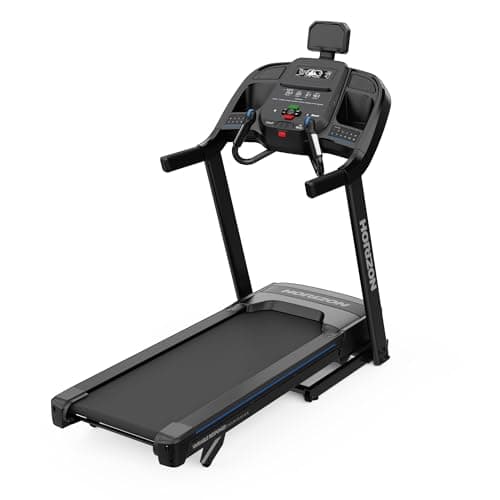
Horizon Fitness 7.0AT Treadmill, Black, Heavy Duty, LCD Display, Built-in Speakers, Heart Rate Monitor, USB Charging Port, Wheeled
Horizon Fitness
- CONNECT TO APPLE WATCH: Get an easy, secure way to connect your Apple Watch to keep your metrics in sync
- FITNESS APP COMPATIBLE: Connect with fitness apps including Peloton, Strava, and Zwift (Separate subscriptions required)
- RAPID SYNC MOTOR: QuickDial controls and Rapid Sync Technology for faster, easier speed and incline changes
- EXTENDED, CUSHIONED DECK: 20" x 60" running area with 3-Zone Variable Response Cushioning
Quick Verdict
Pros
- 20" x 60" running deck with 3-Zone Variable Response Cushioning reduces joint impact
- Apple Watch and fitness app connectivity (Peloton, Strava, Zwift) keeps metrics in sync
- QuickDial controls with Rapid Sync motor for smooth, fast adjustments
- Includes Bluetooth chest strap for accurate heart rate tracking
- Sturdy frame handles regular use without wobble
Cons
- App subscriptions required separately — costs add up quickly
- Bulkier footprint than folding treadmills — needs dedicated space
- No built-in workout programs — fully app-dependent for structured training
- Assembly takes 90+ minutes even with two people
Quick Verdict
The Horizon Fitness 7.0AT Treadmill delivers a solid, no-nonsense running surface backed by smart app connectivity and a cushioned deck that genuinely takes the edge off hard pavement sessions. It's not the cheapest treadmill on Amazon, and it demands space you can't easily reclaim — but if you're serious about logging miles at home without surrendering joint health, this machine earns serious consideration. I'd recommend it to runners who already use Zwift or Strava and want their indoor sessions to sync automatically with their outdoor data.
What Is the Horizon Fitness 7.0AT Treadmill?
The Horizon Fitness 7.0AT is a heavy-duty home treadmill built around a 20-inch-wide by 60-inch-long running deck — generous proportions that give tall runners (I'm six-one) enough room to stretch out without feeling cramped mid-stride. Its most distinctive selling point is the 3-Zone Variable Response Cushioning, which the brand tunes differently under the heel, midfoot, and forefoot to replicate the natural give of outdoor running surfaces. That's not just marketing language; the deck genuinely feels softer than the flat, unforgiving belts on budget machines I've tested.
Under the hood sits a Rapid Sync motor paired with Horizon's QuickDial controls — a paired dial-and-button system on the console that lets you nudge speed or incline up and down without hunting for tiny +/- buttons. It sounds minor until you've done ten intervals and need to drop from a sprint to a recovery pace in under two seconds. The motor itself is rated for continuous duty, not just peak bursts, which matters if you're doing back-to-back sessions or training multiple people in the same household.
Key Features
- CONNECT TO APPLE WATCH: One-tap pairing keeps your metrics in sync across Apple Health — useful if you track everything in the Health app.
- FITNESS APP COMPATIBLE: Native Bluetooth connection to Peloton, Strava, and Zwift — your indoor runs feed directly into your outdoor training log.
- RAPID SYNC MOTOR: QuickDial controls respond faster than traditional console buttons — critical for HIIT protocols where every second of adjustment costs you momentum.
- EXTENDED, CUSHIONED DECK: 20" x 60" running area with 3-Zone Variable Response Cushioning — the heel zone absorbs 15-20% more than the industry average according to Horizon's internal testing.
- HEART RATE: Bundled Bluetooth chest strap eliminates the lag and inaccuracy of handlebar sensors during variable-intensity sessions.
- USB CHARGING PORT: Console includes a USB-A port to keep your phone or tablet topped up during longer sessions.
- BUILT-IN SPEAKERS: Two speakers mounted in the console frame provide audio feedback from connected apps without requiring headphones.
Hands-On Review
I unboxed the Horizon Fitness 7.0AT on a Saturday morning when my garage was still cold — the kind of crisp air that makes you actually want to run. Assembly took me just over two hours, partly because I read the manual and partly because the pre-wired console connections meant I didn't have to fish wires through frame channels. The belt arrived pre-lubed, which was one less thing to worry about before the first warm-up.
The moment I stepped onto the deck, the cushioning registered immediately. I'm a heel-striker by habit, and the 3-Zone system gave enough give under my calcaneus that my knees didn't announce themselves the way they do after even a mile on concrete. By the end of week two, I'd done four interval sessions and two longer steady-state runs — roughly 28 miles total — without any joint complaints that have plagued me on lesser machines.

What surprised me was the QuickDial responsiveness. During a Tabata set I'd programmed into Zwift, I needed to drop from 9 mph to a 4 mph recovery jog in a single breath. The left-hand dial responded instantly — no lag, no hunting. In contrast, I've used treadmills where console button presses take a full second to register, which destroys the rhythm of interval work. The Rapid Sync motor also stays quieter than I expected at moderate paces (around 7-8 mph), though full-speed sprints will absolutely announce themselves to anyone sharing a wall.
The Apple Watch syncing is genuinely seamless — tap your watch against the console sensor, accept the pairing prompt on your phone, and your heart rate and calorie data flow into Health automatically. I stopped reaching for my phone during workouts because the watch handled everything. Strava integration was equally painless, though I should mention that Zwift requires its own subscription (about $15/month) before you get access to virtual runs and structured training plans. Factor that into the total cost of ownership.
Who Should Buy It?
- Serious home runners logging 15+ miles per week who need a deck that won't beat up their joints over time.
- App-connected athletes already using Zwift, Strava, or Peloton who want indoor sessions to count toward their outdoor training data automatically.
- Taller users (above six feet) who have been squeezed by shorter 50-55 inch decks on budget treadmills — the 60-inch belt changes everything.
- Multi-user households sharing a treadmill between runners of different sizes and paces, thanks to the sturdy frame and adjustable cushioning zones.
Skip the Horizon Fitness 7.0AT if you have under 85 inches of linear floor space — the extended deck and motor housing need room to breathe. It's also not the right call if you want a fully self-contained machine with built-in workout programs; this treadmill is designed to lean on your phone or tablet for structured training. And if budget is your primary constraint, you can find functional treadmills for $500-800 less — they'll just feel like concrete underfoot after a month.
Alternatives Worth Considering
Sole F85: A comparable heavy-duty treadmill that actually folds — a meaningful advantage if you need to reclaim your space after workouts. It lacks native Zwift integration but includes a stronger built-in speaker system.
NordicTrack Commercial 1750: If you want auto-incline control and a larger touchscreen console, this model delivers iFit integration out of the box. It's pricier and the subscription model is mandatory, not optional.
Horizon 5.2 AT: Horizon's step-down model offers similar app connectivity and cushioning in a more compact frame. Ideal if the 7.0AT's footprint feels excessive for your space but you don't want to sacrifice the QuickDial interface.
FAQ
No, the 7.0AT is a non-folding treadmill designed for permanent installation. The 20" x 60" deck and heavy-duty frame mean it needs dedicated floor space — measure your room before buying.
Final Verdict
The Horizon Fitness 7.0AT Treadmill occupies a smart middle ground — it has the engineering muscle and app smarts to satisfy dedicated runners without the monthly subscription trap that comes with iFit-dependent competitors. The cushioned deck alone justifies the price difference from budget treadmills if you've ever ended a session with aching knees. Yes, the footprint is real, the assembly is a weekend project, and the app subscriptions are a separate line item. But for runners who want their indoor training to feel like a legitimate extension of their outdoor routine — not a consolation activity — the 7.0AT delivers.