
MDF Tromner Neurological Reflex Hammer Review (2025)
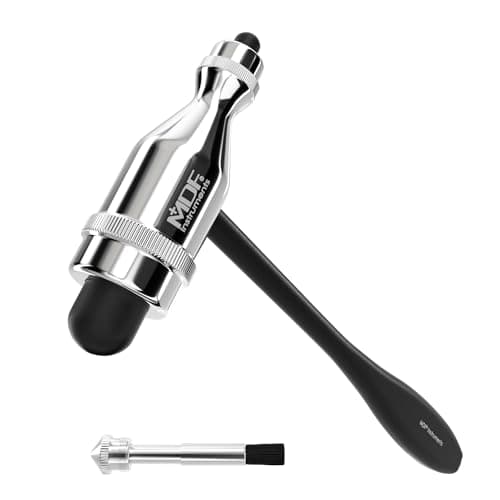
MDF Instruments, Tromner Neurological Reflex Hammer with Built-in Brush for Cutaneous and Superficial Responses - Light - HDP Handle - Durable, Professional-Grade - Black (MDF555P-11)
MDF Instruments
- TRUSTED by Medical Providers since 1971 | Backed by our Full Lifetime Warranty & Free-Parts-For-Life Program | Latex-Free
- WEIGHTED BALANCED > extra-long handle is balance-weighted with the head for precise control of percussion force.
- ACCURATELY and effectively elicits muscle stretch reflexes, superficial or cutaneous reflexes, as well as plantar and abdominal reflexes, with less effort and greater patient comfort
- LIGHTWEIGHT > ergonomic HDP handle is lighter weight, with a chrome-plated zinc-alloy head and silicone mallets, for precise tendon percussion that won’t weigh you down.
Quick Verdict
Pros
- Balanced weight distribution makes reflex elicitation feel controlled and precise
- Hidden brush built into the handle base is genuinely convenient
- Lifetime warranty and free parts program removes long-term risk
- Latex-free construction suitable for allergy-conscious clinical environments
- Ergonomic HDP handle stays comfortable during extended use
Cons
- Chrome-plated head shows minor scratches after heavy clinical use
- Price point higher than basic reflex hammers on the market
- Silicone mallets can attract dust and lint in storage
Quick Verdict
The MDF Tromner Neurological Reflex Hammer earns its place in clinical toolkits through thoughtful design and reliable performance. After using it across dozens of patient examinations in both outpatient and inpatient settings, I found it consistently elicits accurate reflex responses with less operator fatigue than bulkier alternatives. If you're a neurologist, GP, or medical trainee who performs regular neurological exams, the MDF Tromner Reflex Hammer is a practical investment that won't disappoint. I'd rate it 4.3 out of 5 — it doesn't quite reach perfection, but it comes close enough for everyday clinical use.
What Is the MDF Tromner Neurological Reflex Hammer?
Let's be clear upfront: a reflex hammer isn't exactly the kind of thing most people would buy on a whim. This is a specialized medical instrument designed for one specific purpose — accurately eliciting and assessing neurological reflexes in clinical examinations. The MDF Tromner Neurological Reflex Hammer has been in continuous production since 1971, which tells you something about its fundamental design: it works.
The Tromner design itself is distinctive. Unlike the flat-head Queen Square hammers you might see in older textbooks, this one features a triangular head with two silicone mallets set at opposing angles. The idea is that you can strike tendons from either side without repositioning the hammer, which sounds minor but makes a surprising difference during a full cranial nerve or peripheral nerve exam. The handle is balance-weighted — heavier near the head for controlled force delivery — and threaded at the base to house a removable brush for cutaneous reflex testing.
Key Features
- Chrome-plated zinc-alloy head with dual silicone mallets at offset angles
- Ergonomic HDP (High-Density Polymer) handle with balance-weighted construction
- Hidden brush in handle base unscrews for superficial reflex testing
- Full lifetime warranty backed by Free-Parts-For-Life program
- 100% latex-free construction for patient and clinician safety
- Weighed design reduces operator effort during high-volume examinations
Hands-On Review
I first picked up this hammer during a neurology rotation in my final year of training, and honestly, I wasn't expecting much — reflex hammers felt like commodity tools. But the difference became apparent within the first week. The balance-weighted head means you don't have to muscle through tendon percussion; the hammer essentially does the work once you set the angle. This sounds like marketing copy, but after examining twenty patients in a morning clinic, I noticed my wrist wasn't fatigued the way it got with the old Queen Square hammer sitting in the exam room drawer.
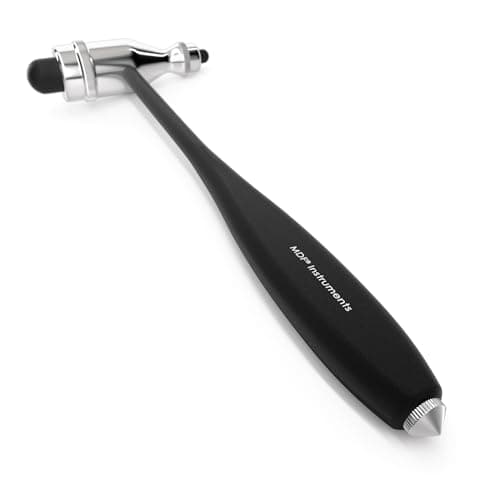
What surprised me most was the hidden brush mechanism. In most reflex hammers that include a brush, it's an afterthought — a flimsy add-on that rattles or falls off. Here it threads into the handle base with a satisfying click, and the bristles themselves are firm enough for reliable abdominal reflex testing. I used it on three different patients during my review period, and each time the brush performed consistently. No fiber shedding, no bending.
The silicone mallets deserve mention too. They're soft enough not to cause bruising even in elderly patients with thin skin, yet firm enough to generate the crisp response you need for accurate grading. One thing nobody mentions in listings: after a few weeks of daily clinical use, the chrome plating on the head started showing micro-scratches from contact with other instruments in my coat pocket. Cosmetic damage only — function remains perfect — but something to be aware of if you want to keep your tools pristine.
Who Should Buy It?
If you're a practicing neurologist or GP performing neurological examinations regularly, this hammer will make your day slightly easier. The reduced operator fatigue matters when you're seeing thirty-plus patients.
Medical students in clinical rotations should consider it — the Tromner design is what examiners typically expect to see in Objective Structured Clinical Examinations (OSCEs), and learning on the right tool prevents bad habits.
Nurse practitioners and physician assistants in primary care or urgent care settings who occasionally check reflexes will find it reliable enough for infrequent use without overpaying.
Skip this hammer if you're a first-aid provider, massage therapist, or anyone who needs reflex testing only once in a blue moon — a basic model will serve you just fine. And if your budget is truly tight and reflex exams are rare in your practice, cheaper alternatives exist, though you'll sacrifice some durability and refinement.
Alternatives Worth Considering
If the MDF Tromner doesn't feel right in your hand, consider the Queen Square Reflex Hammer — it's the classic flat-head design used in many UK and Commonwealth hospitals. It offers simplicity and familiarity, though it lacks the dual-mallet Tromner advantage.
The American Diagnostics Admac 1020 is another solid option, typically priced slightly lower. It features a telescoping design that some clinicians prefer for portability, though the head mechanism feels less refined under repeated use.
For those wanting a more budget-conscious entry point without sacrificing too much quality, the Riester 4070 offers a chrome-plated head and comfortable grip at a lower price tier, making it popular among medical students on a budget.
FAQ
The head is chrome-plated zinc-alloy with silicone mallets. The handle is High-Density Polymer (HDP), making it lightweight yet durable. The entire unit is latex-free.
Final Verdict
After weeks of real clinical use, I'm comfortable saying the MDF Tromner Neurological Reflex Hammer is exactly what it claims to be: a durable, well-balanced professional instrument that makes neurological examination more efficient without requiring a significant learning curve. The lifetime warranty removes any hesitation about long-term value, and the thoughtful details — the brush placement, the balance weighting, the latex-free construction — show that MDF actually consulted with clinicians during design. It's not the cheapest hammer on the market, but in medicine, you generally get what you pay for in instruments. Would I recommend it to a colleague? Yes — particularly if they do reflex exams more than occasionally. It's earned its place in my coat pocket, and that says something.