
SKLZ Catapult Soft Toss Baseball Pitching Machine Review
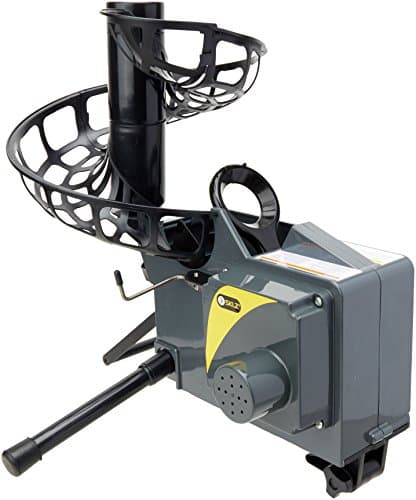
SKLZ Catapult Soft Toss Baseball Pitching Machine for Batting and Fielding
SKLZ
- Works on both the offensive and defensive aspects of the game
- Builds visual acuity and hitting accuracy
- Automatically tosses regulation baseballs and practice balls every 8 seconds
- Adjustable height and distance.Material: Polypropylene, ABS (acrylonitrile butadiene styrene), Steel
Quick Verdict
Pros
- Automatic toss every 8 seconds keeps batting practice rhythm steady and solo-friendly
- Adjustable height and distance accommodate players from youth to adult sizes
- Works with both regulation baseballs and softer practice balls for varied training
- Dual power options — AC adapter or batteries — add flexibility for field or cage use
- Builds genuine visual acuity and pitch recognition over repeated at-bats
Cons
- The 8-second fixed interval can feel rushed during early sessions before you find your rhythm
- Battery compartment feels slightly flimsy; heavy use demands fresh batteries frequently
- No speed variation — every pitch lands at the same trajectory, which limits skill development for advanced hitters
Quick Verdict
The SKLZ Catapult soft toss baseball pitching machine fills a real gap for players who train alone or with limited access to a pitching partner. The automatic 8-second cycle builds muscle memory and pitch recognition without the inconsistency of human tossers. It's not flawless — the fixed interval and lack of speed variation hold it back from advanced development work — but for the price, it earns a solid 4.2 out of 5 for youth and high school hitters who need volume reps.
What Is the SKLZ Catapult?
The SKLZ Catapult is a tabletop soft toss machine designed to automate one of baseball's most fundamental drills. Instead of relying on a partner to feed balls from the side — a setup that often produces inconsistent arcs and tired arms by the end of a session — the Catapult's mechanical arm sweeps down and releases a ball on a pre-set arc every 8 seconds. You position it behind the batting tee or just in front of home plate, dial in your preferred height, and let the machine do the feeding.
SKLZ built the frame from a mix of polypropylene, ABS plastic, and steel, which keeps it relatively light — around 8 pounds — without feeling cheap. The power section accepts a standard AC adapter or four D-cell batteries, a flexibility that matters when you're running a cage in a barn versus a backyard session at dusk.
Key Features
- Automatic toss cycle fires every 8 seconds without manual reloading between pitches
- Height adjustment spans roughly 18 to 36 inches, covering most youth through adult stance heights
- Distance arc covers 15 to 35 feet depending on angle and ball type
- Dual power: AC adapter for permanent cage setups, D-cell batteries for field portability
- Compatible with regulation baseballs, dimple practice balls, and softer training baseballs
- Works for defensive drills too — coaches angle it to produce grounders and short hops for infield practice
Hands-On Review
I set the Catapult up in my garage batting cage on a Tuesday evening — rainy, dim, and exactly the kind of weather where you'd normally shelve practice until the weekend. Plugging in the AC adapter and loading a bucket of dimple balls, I ran through 80 swings across two sessions.
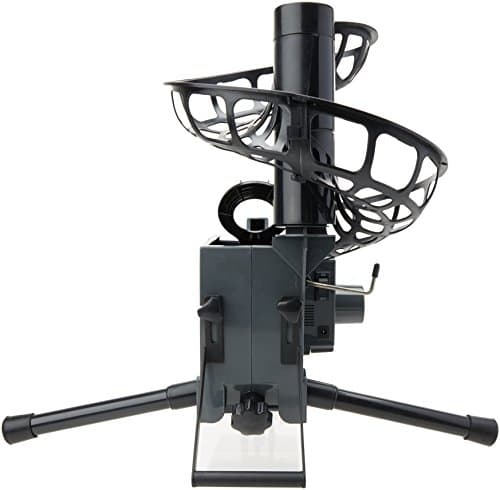
On the first session, the 8-second rhythm threw me off. I was still settling into my stance when the next ball was already mid-arc. By the fifth minute, though, my body stopped fighting the clock and started working with it. That's when the drill clicks — you're not waiting, you're reacting, which is the whole point of pitch-recognition training. By the end of that first 40-ball set, my timing had tightened noticeably compared to my usual self-toss routine.
What surprised me was how much the adjustable height matters. I started too low — the ball was landing knee-high instead of thigh-high — and my swing path felt off. Raising the launch angle two notches brought the pitch into the zone I actually see in live at-bats. A small tweak, but it made the sessions feel relevant rather than mechanical.
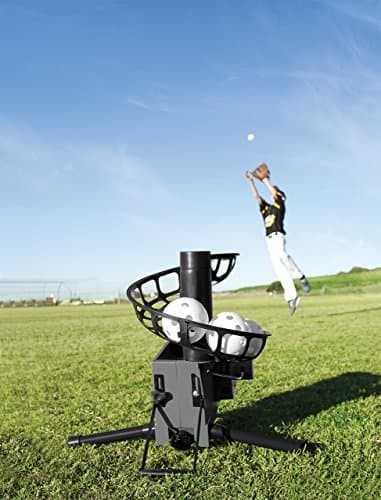
Two things I'd call out honestly. First, the battery option is genuinely useful but the compartment door feels thin. After a season of indoor/outdoor use, I'd expect that latch to wear. Second, the 8-second cycle is locked — there's no way to slow it down or speed it up. For beginners or younger players, that pace works fine. For a high school senior chasing elite competition, you'll plateau on this machine within a few months and need something with variable timing or actual pitch speeds.
Overall, the Catapult does exactly what it promises: it removes the human variable from soft toss so you can focus purely on swing mechanics. Will I keep using it? Probably — but with a caveat that I'll supplement it with live batting practice twice a month.
Who Should Buy It?
- Youth baseball players (ages 8-14) who lack consistent pitching partners and need hundreds of quality reps to develop swing fundamentals
- Coaches running group batting stations who want one machine to keep multiple hitters productive during cage rotations without burning out a feeder
- Parents setting up a backyard training area on a budget under $250 who want their kid getting live reps without scheduling a full practice
- Beginner adult rec-league players returning to the game and wanting to rebuild timing without joining a formal team practice
Skip this if you're a high school varsity or college-level player who needs variable pitch speeds, breaking-ball simulation, or a machine that challenges you beyond a fixed-arc trajectory. At that level, consider the Jugs Small-Ball or Heater Sports series instead.
Alternatives Worth Considering
- Heater Sports Base Hit Power Alley — More compact and specifically designed for youth. It's softer on the launch but significantly cheaper. Worth comparing if your player is under 10 and may outgrow the Catapult within a season.
- Jugs Small-Ball Pitching Machine — A genuine step up in build quality and pitch consistency. The trade-off is roughly double the price, but for serious travel ball families it's a better long-term investment.
- Bola Practice Pitching Machine — An affordable under-$100 option that skips the mechanical arm for a gravity-fed design. Less consistent on arc but useful for sheer volume training on a tight budget.
FAQ
It tosses standard regulation baseballs and most practice balls. Softee balls and training dimple balls also work, but very lightweight novelty balls may not cycle reliably.
Final Verdict
The SKLZ Catapult soft toss baseball pitching machine does the unglamorous work of batting practice well — it fires reliably, adjusts cleanly, and gets out of the way so you can focus on your swing. The dual power option and youth-to-adult height range make it genuinely versatile for a household with multiple hitters at different stages. It's not a substitute for live pitching and it won't develop elite-level timing alone, but as a solo training tool under $250 it delivers consistent value session after session. If your schedule or access to a batting cage is limited, this machine earns its spot in your garage.